Introduction
According to the CDC, ladders caused 161 workplace fatalities and 22,710 workplace injuries in a recent data year — many involving the wrong ladder for the job. Step ladders and platform ladders are both self-supporting and portable, yet they're engineered for fundamentally different work scenarios.
Picking the wrong one is more common than most tradespeople expect. Using a step ladder for a three-hour ceiling job creates unnecessary fatigue and fall risk. Dragging a heavy platform ladder between rooms for quick bulb changes burns time and kills productivity.
Installation, maintenance, and repair jobs alone accounted for 5,790 of those injuries, with construction and extraction adding 5,370 more. The right ladder, matched correctly to the task, prevents a significant share of these incidents.
This guide breaks down how each type is built, what it's designed for, and the key decision factors — job duration, height, terrain, and whether you need both hands free — so tradespeople and safety managers can choose with confidence.
TL;DR
- A platform ladder has a wide, flat standing surface built for extended tasks requiring both hands free; a step ladder is a lighter A-frame design for short, low-level jobs where repositioning often
- Step ladders work best for tasks under 30 minutes, below 12 feet, and where you need to move frequently
- Choose a platform ladder when a job exceeds 30 minutes at height, demands two-handed work, or requires carrying tools up with you
- Both types are self-supporting — no wall needed — but differ significantly in stability, weight, and working height
- Safety comes down to matching the right ladder to the task, not one type being inherently better than the other
Platform Ladder vs Step Ladder: Quick Comparison
Design and Top Surface
Step ladder: A-frame structure with a cap or top step—no dedicated standing platform. Users stand on a narrow rung, which limits balance and comfort during extended work.
Platform ladder: Features a wide, flat platform at the top, often with rear guardrails, providing a secure standing area that frees both hands for the task.
Best Use Scenario
Step ladder: Quick access tasks, frequent repositioning, confined spaces, and light-duty jobs where setup speed matters more than standing comfort.
Platform ladder: Prolonged overhead work, two-handed tasks, and jobs requiring a stable tool-rest area—especially when working at height for more than 30 minutes continuously.
Height Range
Step ladder: Typically reaches 6–20 feet, with most common use under 12 feet. Best for low-to-moderate height tasks where you'll move the ladder often.
Platform ladder: Generally used for 12 feet and above; some models extend to 20+ feet. Better suited for fixed-position work at higher reach heights.
Portability and Weight
Step ladder: Lightweight and highly portable—easy to carry between vehicles, rooms, or job sites. Aluminum models weigh significantly less than platform equivalents.
Platform ladder: Heavier and bulkier due to the larger standing surface and guardrails. Less portable but more stable once positioned.
Approximate Cost
Each design's price reflects its engineering and safety features:
Step ladders:
- Entry-level: ~$70 (6 ft. aluminum, 250 lb capacity)
- Professional-grade: $287 for an 8 ft. fiberglass model — $392 for a 12 ft. fiberglass version
Platform ladders:
- Entry-level: ~$133 for a 6 ft. aluminum model
- Professional-grade: $249 for a 6 ft. fiberglass podium — over $1,072 for a 10 ft. aluminum podium with casters
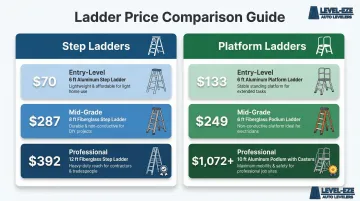
That cost gap matters most when you're choosing for sustained, high-reach work — where the platform's stability features directly reduce fatigue and risk.
What Is a Step Ladder?
A step ladder is a self-supporting, A-frame folding ladder with flat steps and a hinged rear support rail. The key distinction many buyers miss: swingback step ladders have no top platform—just a top cap or narrow step—while some models include a small tool tray. Neither design provides a wide standing surface.
Key structural features:
- Foldable A-frame design with locking spreader bar for stability
- Available in aluminum, fiberglass, or timber
- Typically sized from 2 to 20 treads (most common: 4–12 feet)
Core operational benefits:
- Fast setup with no need to lean against a surface
- Lightweight design reduces transport fatigue between job sites or rooms
- Compact footprint suits tight or cluttered spaces where larger ladders won't fit
Use Cases of a Step Ladder
Step ladders excel in specific task scenarios where speed and portability matter most:
- Changing light fixtures or ceiling tiles
- Painting walls at low-to-moderate heights
- Quick inspection tasks
- Retail shelf stocking
- Light electrical work
- Accessing overhead storage or high shelving
OSHA doesn't specify a numeric time limit for ladder use, but U.S. safety managers widely adopt a 30-minute threshold as best practice — a benchmark supported by the UK's Health & Safety Executive (HSE), which explicitly recommends alternative equipment for tasks exceeding that window. Standing on a step ladder beyond 30 minutes increases fatigue and fall risk.
Ideal job site conditions:
- Flat, stable interior floors
- Tasks requiring frequent ladder movement (repositioning every 10–15 minutes)
- Situations where setup and breakdown speed matter more than standing comfort
What Is a Platform Ladder?
A platform ladder is a self-supporting folding ladder featuring a wide, flat standing surface (platform) at or near the top, often with a rear guardrail or handrail. While "platform steps" can also refer to fixed warehouse steps, this article focuses on the portable, folding version used on job sites.
Structural differences from a step ladder:
- Larger standing area (typically 14–24 inches square) reduces balance demands
- Rear guardrails keep hands free for the task
- Broader base adds stability, particularly on slightly uneven surfaces
- Heavier construction (often 15–30 lbs more than equivalent step ladders)
Core operational benefits:
- Reduced fatigue during sustained work at height
- Ability to hold tools and materials on the platform
- Guardrail as a passive safety feature that frees both hands for detailed work
Use Cases of a Platform Ladder
Platform ladders suit jobs that demand stability and sustained overhead work:
- Painting ceilings or high walls for extended periods
- Electrical installation or wiring work
- HVAC maintenance and ductwork installation
- Overhead plumbing repairs
- Commercial facility maintenance requiring a stable work position for 30+ minutes
- Light industrial tasks involving two-handed tools at height
Platform ladders are best suited for jobs in the 12–20 foot range where the user stays near the top for most of the task, rather than constantly repositioning. They also handle slightly uneven or outdoor surfaces better than step ladders due to their wider base. That said, severely uneven terrain—slopes, curbs, rooftops—requires a different solution, such as an extension ladder with a leveling device.
Platform Ladder vs Step Ladder: Which One Should You Use?
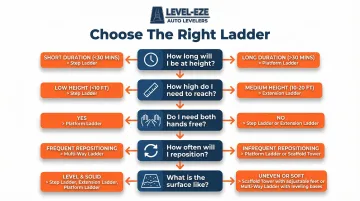
Instead of declaring one ladder universally better, frame the choice around five practical questions:
- How long will I be at height?
- How high do I need to reach?
- Do I need both hands free?
- How often will I reposition?
- What is the surface like?
How Long Will You Be Up There?
If the task requires standing at height for more than 30 minutes continuously, a platform ladder is the safer and more ergonomic choice. For shorter tasks (bulb changes, quick adjustments, brief inspections), a step ladder's portability wins.
Does Reach Height or Repositioning Drive the Job?
For reach heights under 10–12 feet and tasks that require moving the ladder repeatedly, a step ladder is more practical. Above 12 feet or for fixed-position work, a platform ladder's stability and guardrail become critical.
Do You Need Both Hands Free?
Jobs involving two-handed tools (drills, paint rollers, pipe wrenches) or carrying materials up the ladder strongly favor a platform ladder. Quick one-handed tasks (swapping a bulb, tightening a screw) suit a step ladder.
What Does the Workspace Look Like?
Confined or cluttered spaces—especially indoors—favor a compact step ladder. Large open work areas or fixed job stations favor the platform ladder's stability even at the cost of weight.
Situational Summary
Choose a step ladder for everyday portability and short-duration, low-to-moderate-height tasks.
Choose a platform ladder when safety, endurance, and two-handed work take priority.
For significantly uneven outdoor terrain—where neither self-supporting type is ideal—extension ladders with proper leveling devices become the right tool. Unstable footing on uneven ground is the single biggest cause of outdoor ladder accidents—and it's entirely preventable. Level-EZE's automatic ladder leveler attaches to existing extension ladders and self-adjusts on slopes, curbs, and rooftops without manual shimming. It adds approximately 4 inches to the ladder base width for increased stability and meets all ANSI standards for portable extension ladders.
Safety Considerations for Both Ladder Types
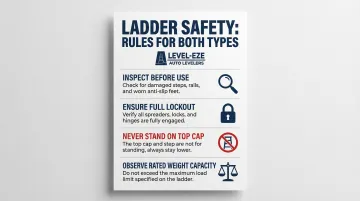
Shared safety rules apply regardless of ladder type:
- Inspect before every use: Check for bent rails, loose hinges, cracked steps, and damaged spreader bars
- Ensure full lockout: The ladder must be fully opened and locked before climbing
- Never stand on the top cap or top step of a step ladder: OSHA 29 CFR 1926.1053(b)(13) explicitly prohibits this
- Observe rated weight capacity: Total weight includes your body weight plus tools and materials
OSHA and ANSI Standards
OSHA does not universally mandate platform ladders over step ladders, but does require that any portable ladder meets OSHA 1926.1053 (construction) or 1910.23 (general industry) standards. Some employers and general contractors require platform ladders as a site-specific safety upgrade.
ANSI/ASC A14.2 (Portable Metal Ladders) and ANSI/ASC A14.5 (Portable Reinforced Plastic Ladders) define the same duty ratings for both step and platform ladders:
- Type I: 250 lbs (Heavy Duty / Industrial)
- Type IA: 300 lbs (Extra Heavy Duty / Professional)
- Type IAA: 375 lbs (Special Duty / Rugged)
Terrain and Leveling Risk
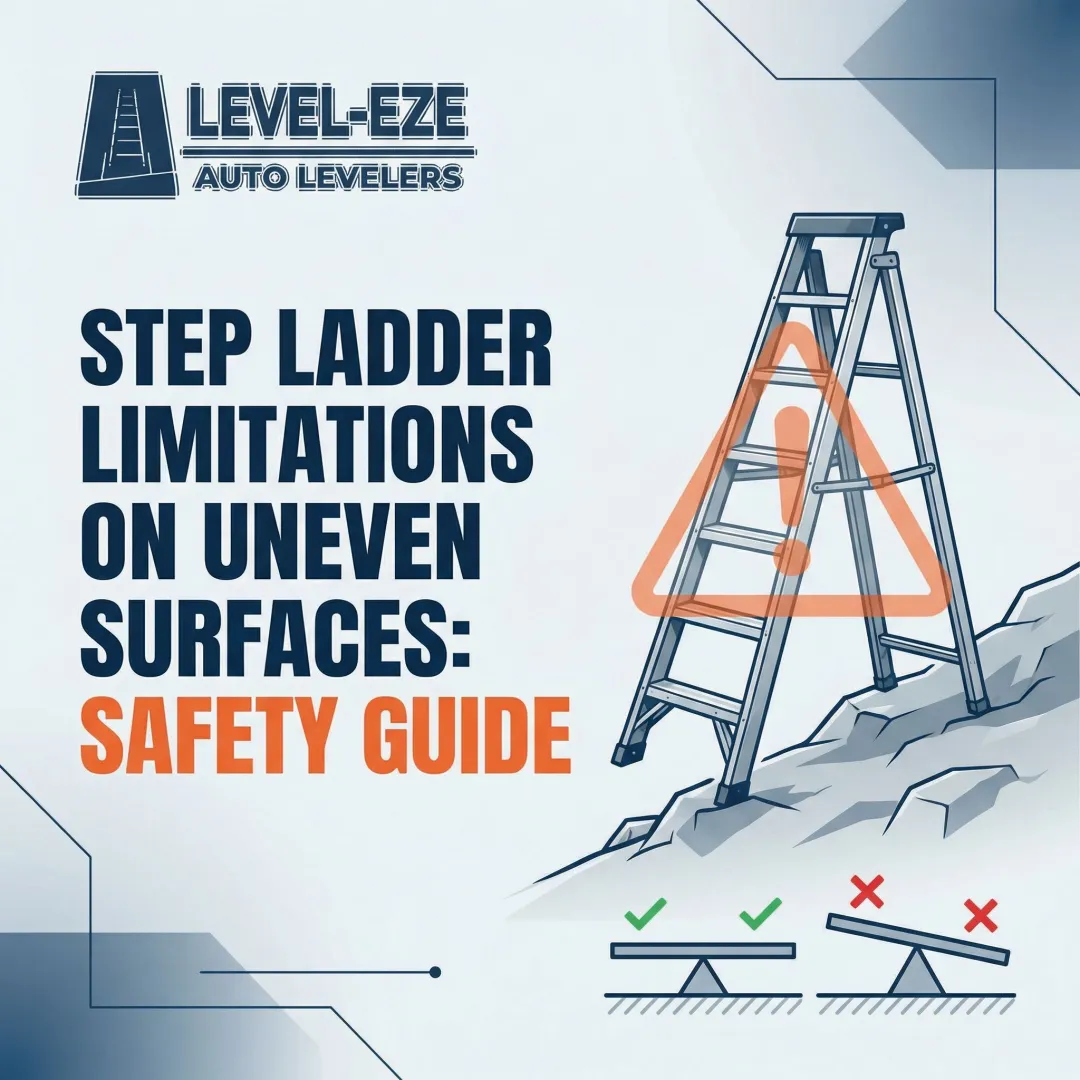
Uneven terrain shifts load unevenly on both platform and step ladders, increasing tip-over risk. OSHA and HSE mandate that ladders be used on stable, level surfaces. The HSE explicitly warns against ad-hoc leveling such as bricks, blocks, or timbers, requiring proprietary leveling devices instead.
For professionals who also use extension ladders on slopes, curbs, or uneven outdoor terrain, improvised shimming is where accidents start. Level-EZE's automatic ladder leveler removes that risk entirely. Key features include:
- Adjusts up to 9.5 inches automatically — no manual shimming required
- Adds approximately 4 inches to the base width for increased stability
- Maintains ANSI compliance, addressing one of the leading causes of outdoor ladder accidents
Frequently Asked Questions
What is the difference between a step ladder and a platform ladder?
Both are self-supporting A-frame ladders, but a platform ladder has a wide, flat standing surface at the top (often with guardrails) while a step ladder has a narrow top step or cap. Platform ladders are better for longer, hands-free tasks; step ladders are better for quick, portable jobs.
When should you use a platform ladder?
Platform ladders are the right choice when a task requires standing at height for more than 30 minutes, involves two-handed work, or demands carrying tools and materials—such as electrical installation, ceiling painting, or overhead HVAC work.
What ladder type is safest for home use?
For most home tasks (changing bulbs, hanging décor, accessing high shelves), a 4–6 foot step ladder is sufficient and easier to store. A platform ladder is a better home choice if DIY projects require sustained overhead work like painting or installing ceiling fans.
Does OSHA require platform ladders?
OSHA does not mandate platform ladders over step ladders, but requires any portable ladder to meet OSHA 1926.1053 (construction) or 1910.23 (general industry) standards. Some employers add platform ladder requirements internally as part of their own safety programs.
Can you use a step ladder or platform ladder on uneven ground?
Both ladder types require a stable, level surface—using either on uneven ground without proper leveling is a safety violation. On significantly uneven terrain, an extension ladder fitted with an ANSI-compliant leveling device (such as Level-EZE automatic levelers) is the more appropriate tool.
How much weight can a platform ladder hold compared to a step ladder?
Both types are available in Type I (250 lb), Type IA (300 lb), and Type IAA (375 lb) duty ratings per ANSI standards. Capacity alone doesn't determine which ladder to choose—match the duty rating to your combined body weight plus tools and materials.
Conclusion
Step ladders and platform ladders solve different problems — they're not competing products. A step ladder belongs in every tradesperson's kit for its speed and portability. A platform ladder earns its place when the task is long, demanding, and requires both hands. The safest approach: evaluate each job on its own terms — duration, height, terrain, and workload — rather than defaulting to whichever ladder is nearest.
When that evaluation gets skipped, the consequences compound quickly. The wrong ladder doesn't just create a safety hazard — it also:
- Slows work down and causes early fatigue
- Increases the risk of a costly incident
- Creates compliance gaps for safety managers overseeing multiple crews
For safety managers and fleet managers, standardizing ladder selection criteria across teams — based on the five decision factors covered in this guide — is a practical way to reduce ladder-related incidents without major investment.