Introduction
Painting a stairwell ranks among the most requested yet consistently underestimated DIY tasks. Homeowners and contractors face the challenge of working at height on a surface that's neither flat nor level. In 2020 alone, the CPSC estimated 227,000 emergency department-treated injuries associated with ladders, with improper setup on uneven surfaces being a major contributor.
The problem is straightforward: standard ladders are designed for flat floors. Stairs introduce uneven footing, shifting risks, and tight maneuvering room — the exact conditions behind most stairwell painting injuries.
This guide covers how to set up and use a ladder on stairs correctly, from choosing the right equipment to positioning, climbing, and finishing the job safely.
TL;DR
- Standard A-frame ladders on stairs will tip: uneven leg heights make them unstable without modification
- Multi-position ladders with adjustable legs or automatic leveling accessories compensate for angled stair surfaces without manual shimming
- Always confirm the ladder is level, locks engaged, and feet non-slip before climbing
- Work top-to-bottom so you never lean against wet paint
- Three points of contact at all times — and reposition the ladder instead of reaching beyond arm's length
Why Painting Stairs with a Ladder Is Uniquely Challenging
Unlike flat-floor painting, stairwells create a compound problem: each ladder leg lands at a different height, causing the ladder to tilt unless adjusted. NIOSH identifies incorrect ladder setup as responsible for approximately 40% of falls where the ladder slides out at the base. On stairs, this risk multiplies.
Three physical factors make stair painting harder than standard ladder work:
- Step surfaces sit at angles, so no two ladder feet rest on the same plane
- Tight horizontal space limits how far you can spread the ladder's base for stability
- Total height often exceeds what a 6-foot step ladder can safely reach
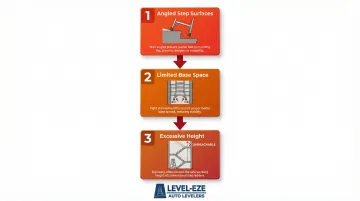
None of these are deal-breakers. They do mean you need the right ladder setup and a deliberate sequence — otherwise an otherwise routine job becomes a fall risk.
What You Need Before Setting Up Your Ladder
Required Equipment
Gather these four items before you position a single ladder foot on the stairs:
- Multi-position or combination ladder — Standard ladders can't compensate for stair height differences. Multi-position models with independently adjustable legs are essential; Werner and Little Giant both offer dedicated staircase modes where each side rail adjusts separately.
- Automatic ladder leveling device — A leveler confirms the base is truly level on uneven surfaces. The Level-EZE, for example, is ANSI-certified, adds roughly four inches to base width for stability, and locks automatically with as little as 9 lbs of weight, so there's no manual shimming required.
- Non-slip feet or stair-grip pads — OSHA regulation 29 CFR 1926.1053(b)(7) requires ladders on slippery surfaces to be secured or fitted with slip-resistant feet. Rubber feet are non-negotiable on smooth stair finishes.
- Drop cloths, paint tray, and extension pole — Cover all steps and railings before you start. A hook-on paint bucket keeps tools within arm's reach and cuts down on unnecessary ladder climbs.
How to Use a Ladder to Paint Stairs Safely
Safe ladder use on stairs follows a strict sequence. Setting up carelessly, skipping the leveling check, or working out of sequence are the primary causes of wobble, slippage, and falls.
Setting Up the Ladder on Stairs
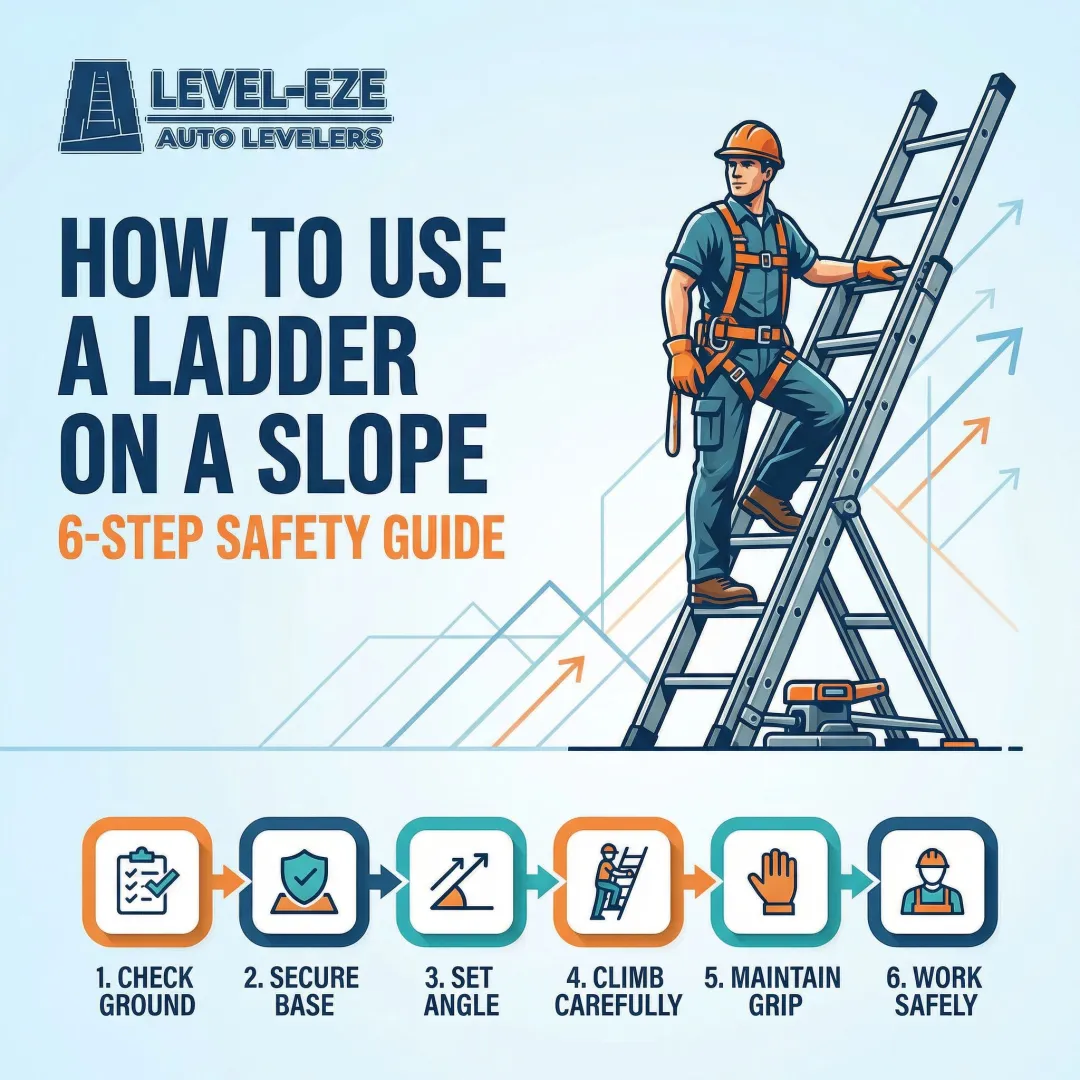
Position the ladder so one set of legs rests on a single stair tread and the other set either rests on a lower tread or against the opposite wall. For multi-position ladders, extend one side shorter and the other longer to match the height difference.
Critical checks before climbing:
- Confirm the ladder does not rock in any direction—test it physically, not just visually
- Verify all hinge locks, locking pins, and spreader bars are fully engaged—push down on each side to verify resistance
- Never place only one foot on a tread edge, which can crack or shift
- Check for slippery finishes underfoot before applying weight
- Start securing from the lower landing, never from the top of the stairwell
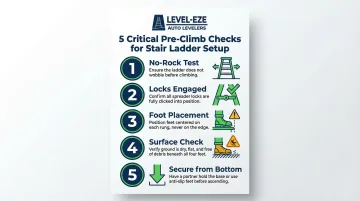
OSHA 29 CFR 1926.1053(b)(6) requires ladders to be used only on stable and level surfaces unless secured to prevent accidental displacement. On stairs, this means confirming level positioning before every climb. An automatic ladder leveler — such as those made by Level-EZE — eliminates the guesswork of manual shimming when stair treads create uneven leg heights, a common setup problem on interior staircases.
Climbing and Positioning on the Ladder
Climb facing the ladder with both hands on the rails, not the rungs. Pause on the first two rungs to test for any movement before ascending further.
Working height rules:
- Your hips must remain between the two side rails at all times
- Never stand on the top cap or step below the top cap of a stepladder
- Never use the top three rungs of an extension ladder — loss of control is immediate from that height
Keep paint tools hooked to the ladder or held in one hand only. Don't carry heavy paint cans up the ladder—use a hook-on bucket that clips to a rung at working height.
Working from the Ladder
Paint in a controlled vertical zone directly in front of your body. Keep your belt buckle between the ladder stiles at all times. If you cannot reach a spot without bending beyond this point, descend and move the ladder.
Painting technique tips:
- Use a cut-in brush for high corners rather than overextending with a roller
- Drop the cut-in line slightly lower than needed so an extension pole roller can finish cleanly from the ground
- Treat any wobbling, creaking at joints, or shifting feet as an immediate stop signal — descend and re-check setup before continuing
Descending and Relocating the Ladder
Descend facing the ladder, both hands on rails, one step at a time. Never jump from a rung or turn around on the ladder to step off. Once your feet are on solid ground, relocate before reaching again.
Relocation rules on stairs:
- Move in small increments — never stretch to cover extra area
- Re-check all four feet for stability after every move
- Lateral force from overreaching is the leading cause of stair ladder shifts
Consistent repositioning takes more time up front, but it eliminates the most dangerous moment in stairwell painting: the reach that goes one inch too far.
Choosing the Right Ladder for Stair Painting
| Ladder Type | Best For | Key Considerations |
|---|---|---|
| Multi-Position/Combination | Most versatile option for stairs | Independently adjustable legs compensate for step rises; confirm model supports uneven-surface positioning in specifications |
| Extension | Very tall stairwells | Must be leaned against solid wall (never window); base needs flat landing or stair pads to prevent sliding |
| Platform | Lower-height stairwells or wide landings | Flat standing surface more stable for extended sessions; doesn't address uneven leg placement alone |
Once you've matched the ladder type to your stairwell, duty rating is the next factor to confirm.
Duty Rating Requirements
Painting tasks involve carrying tools and materials — a 5-gallon paint bucket alone weighs approximately 60 lbs, which adds up fast when combined with your body weight and gear. A duty rating of at least 250 lbs (Type I or higher) is the standard recommendation for most painting work:
- Type IAA: 375 lbs (special duty)
- Type IA: 300 lbs (extra heavy-duty)
- Type I: 250 lbs (heavy-duty)
- Type II: 225 lbs (medium-duty)
- Type III: 200 lbs (light-duty)

The rating must cover your body weight plus clothing, tools, and paint supplies combined. For most adults fully equipped, that total routinely exceeds 275–300 lbs — which is why Type I (250 lbs) is the realistic floor, not the ceiling.
Best Practices for Staying Safe While Painting Stairs
Work Top to Bottom
Start painting the highest area of the stairwell first, then work downward. This ensures you never lean a ladder against freshly painted walls or back yourself into a wet corner.
Never Work Alone
NIOSH recommends having a co-worker help keep the ladder secure when ascending or descending with items. On stairs, a single unexpected movement can destabilize a ladder faster than on flat ground. A spotter can monitor the base, hand up tools, and respond immediately if the ladder shifts.
Inspect Before Every Use
OSHA 29 CFR 1926.1053(b)(15) requires ladders be inspected for visible defects before each work shift. Check for:
- Cracked rails or bent rungs
- Loose locking mechanisms
- Dirty or wet feet
- Any visible damage or wear
Stairs are unforgiving of compromised equipment.
Keep the Stairwell Clear
Remove obstacles, furniture, or tools from steps that could block a quick exit or cause a trip hazard. Ensure no wet paint on treads where you will step.
Use Proper Leveling Equipment
Keeping the stairwell clear removes trip hazards — but stabilizing the ladder base is a separate problem that improvised fixes make worse. OSHA 29 CFR 1910.23(c)(13) explicitly prohibits placing ladders on boxes, barrels, or unstable bases. Stacked boards, folded drop cloths, and improvised wedges shift under load on smooth-finish stairs.
Purpose-built automatic ladder levelers solve this properly. Look for equipment that:
- Meets ANSI standards for portable extension ladders
- Locks automatically when weight is applied
- Works on both level and uneven step surfaces without manual adjustment
Frequently Asked Questions
What type of ladder is safest to use on stairs for painting?
Multi-position or combination ladders with independently adjustable legs are safest because they can be set to different heights on each side to adapt to uneven stair surfaces. Extension ladders are suitable for taller stairwells when properly secured against a solid wall with the base on a flat landing or equipped with leveling devices.
Can I use a standard A-frame step ladder on stairs to paint?
No, a standard A-frame ladder is not safe on stairs as-is because all four feet land at different heights, causing the ladder to tilt and shift. It can only be used safely if paired with a leveling accessory or stair pads that bring all contact points to the same effective plane.
How do I keep a ladder from slipping on stairs while painting?
Prevent slipping with non-slip rubber feet, stair-grip pads on treads, and a leveling device to eliminate rocking. A spotter to monitor the base is strongly recommended, especially when repositioning — most slips happen during moves, not while you're stationary, so re-check your setup each time.
Should I paint a stairwell from the top down or bottom up?
Always paint top-to-bottom so the ladder is never leaned against wet paint and you aren't forced to work around drying sections below you.
Do I need someone to hold the ladder while painting stairs?
Yes, a spotter is strongly advised on stair jobs because the uneven surface means the ladder can shift in directions harder to anticipate than on flat ground. A spotter allows the painter to keep both hands on the task rather than gripping for reassurance and can respond immediately if instability occurs.
How high should I climb on a ladder when painting a stairwell?
Stop at least two rungs below the top of a step ladder and three rungs below the top of an extension ladder. Working at the correct height means your work area is at chest-to-shoulder level, not above your head, which keeps your center of gravity stable and reduces fatigue.